





Bosch polymer removal comparison
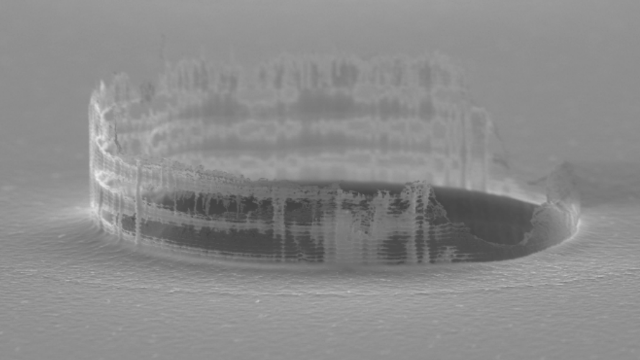
Deep reactive ion etching (DRIE) of silicon via the Bosch process is well known for its ability to produce features with vertical sidewalls and high aspect ratios, due to the protection of vertical surfaces etched during each cycle by a Teflon-like fluoropolymer. While essential to achieving the highly anisotropic etch, however, this Bosch sidewall polymer is infamously difficult to remove completely, as it is largely chemically inert and adheres very well to the underlying Si. Typical removal techniques include oxygen plasma ashing, wet chemical processing (piranha, hydroxylamine-based strippers, RCA clean), high-temperature anneals, or combinations of these processes.
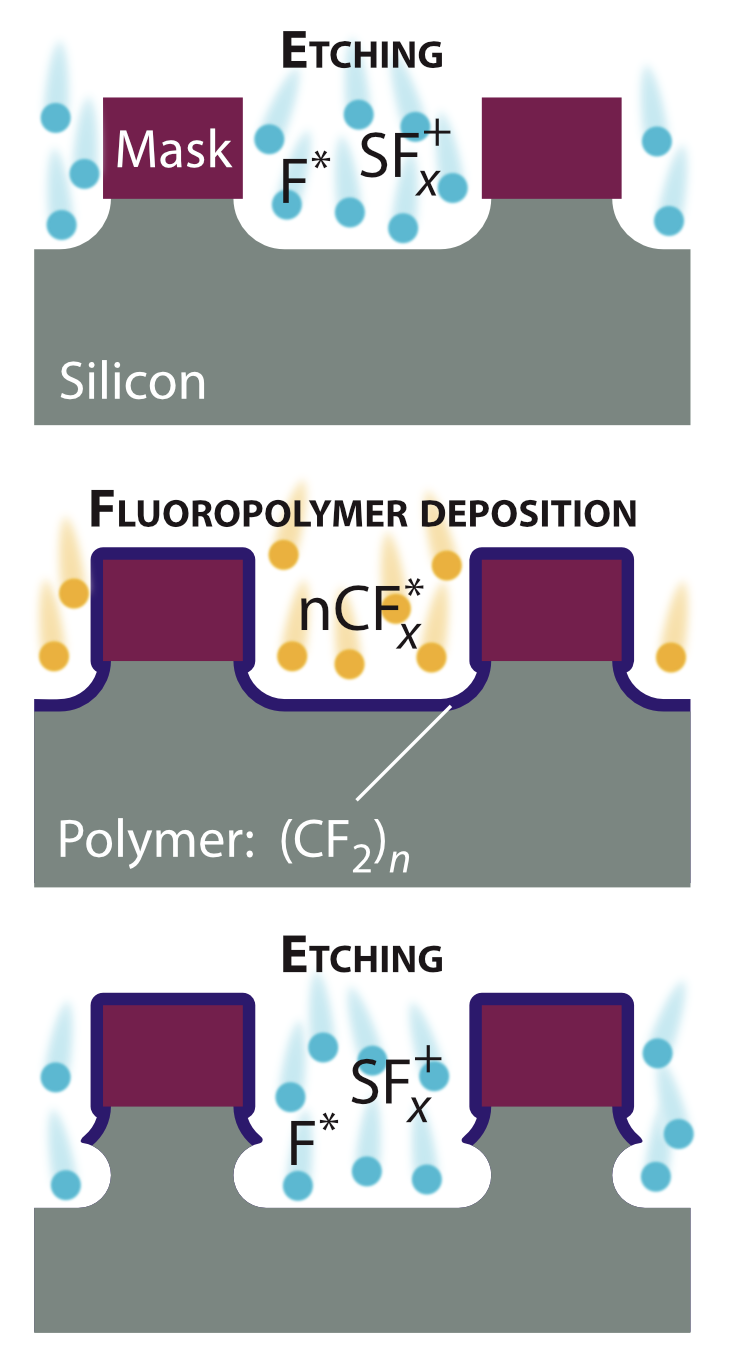
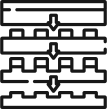
Bosch etch process. The isotropic etch and fluoropolymer steps are repeated in each cycle.
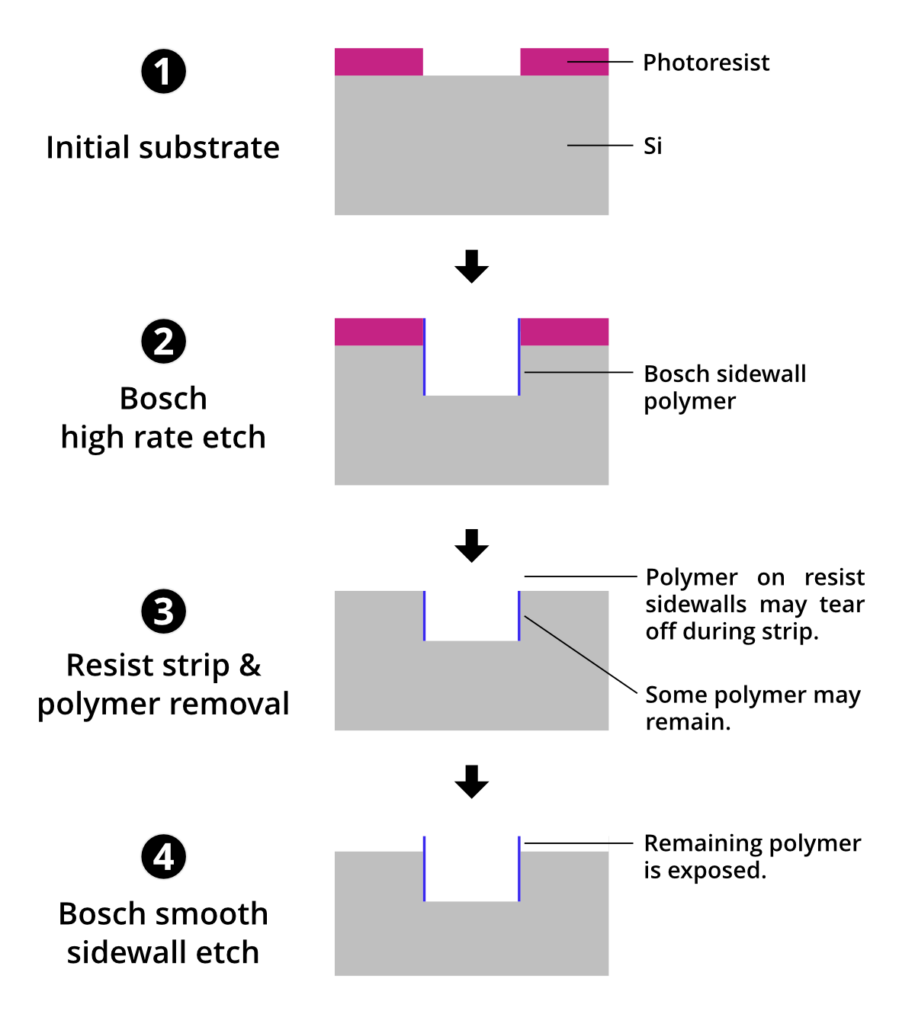
Part of the difficulty lies in determining conclusively whether the polymer has indeed been removed after any stripping process: as it coats the sidewalls with high conformality and is typically very thin (<100 nm), the polymer is nearly indistinguishable from a bare Si sidewall when imaged via SEM. Furthermore, the polymer coating the photoresist sidewalls generally tears off during the resist strip process, such that there is no tell-tale “crown” of polymer surrounding the etched features, even if polymer still remains on the Si sidewalls.
To overcome this issue and make it plain whether any sidewall polymer remains after various removal techniques, we developed the following process flow:
- Initial substrates: 150 mm diameter Si wafers coated with ~3.5 µm AZ 1529 photoresist.
- DRIE: Perform 100 cycles of the Bosch High Rate recipe on all wafers, using the Oxford Estrelas ICPRIE.
- Strip: Cleave wafers into quarters, then strip resist and attempt to remove sidewall polymer using one of the following methods:
- Branson Barrel Etcher – 30 min O2 plasma
- Branson – 60 min O2 plasma
- Branson – 30 min O2 plasma + Middle Minibrute Furnace – 1 hr anneal at 700 °C in flowing N2
- Branson – 30 min O2 plasma + 30 min soak in ECK265 (heated to 60 °C)
- Trion RIE – 30 min O2 stripping recipe
- Oxford NGP80 RIE – 30 min Descum high recipe
- NGP80 – 30 min Descum PE mode recipe
- Piranha – 30 min in self-heated 3:1 H2SO4:H2O2
- DRIE: Perform 50 cycles of the Bosch Smooth Sidewalls recipe (Oxford Estrelas), with wafer quarters mounted to 150 mm carriers using Crystalbond 555HMP.
N.B. If any sidewall polymer remains after the stripping step, it will be exposed by this second etch, making it easy to image via SEM.
SEM imaging after the second DRIE step was done using the Zeiss Sigma FESEM:
Branson (30 min) - 10 µm posts
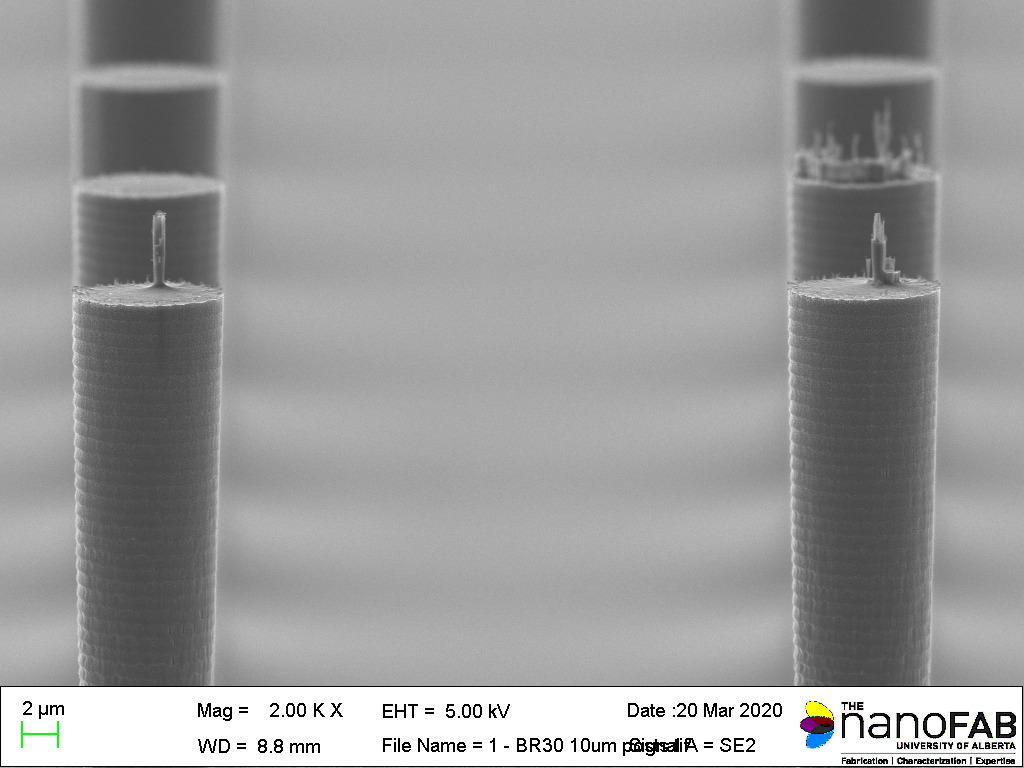
Structure: 10 µm posts
Branson (30 min) - 10 µm vias
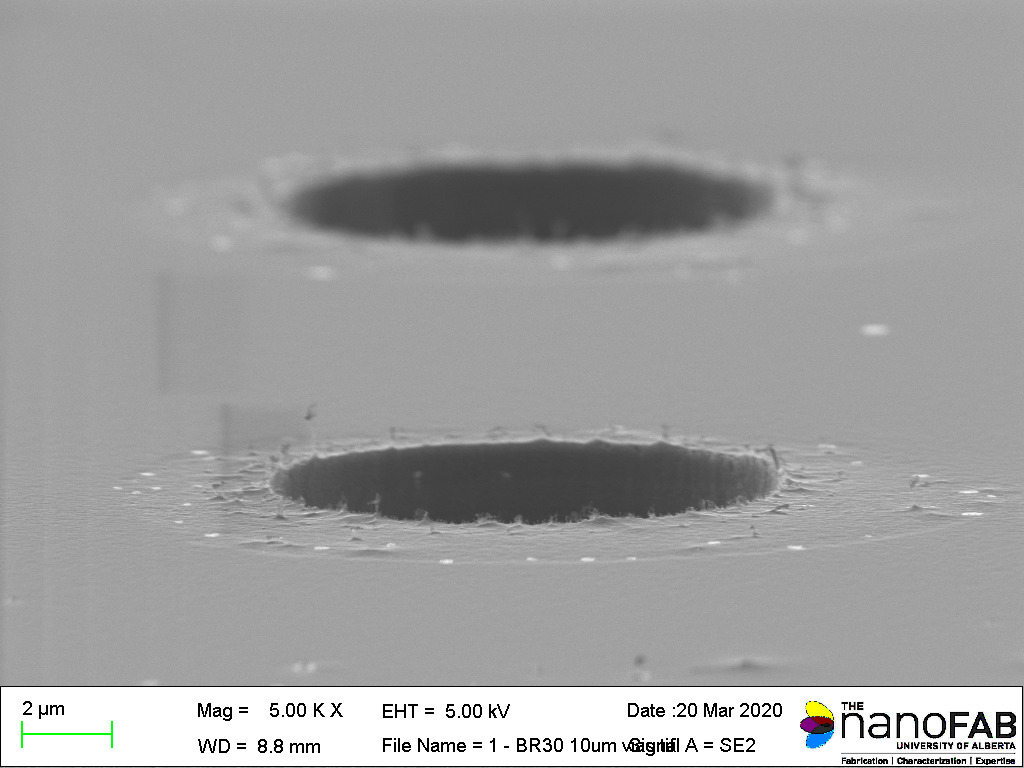
Structure: 10 µm vias
Branson (30 min) - ovals
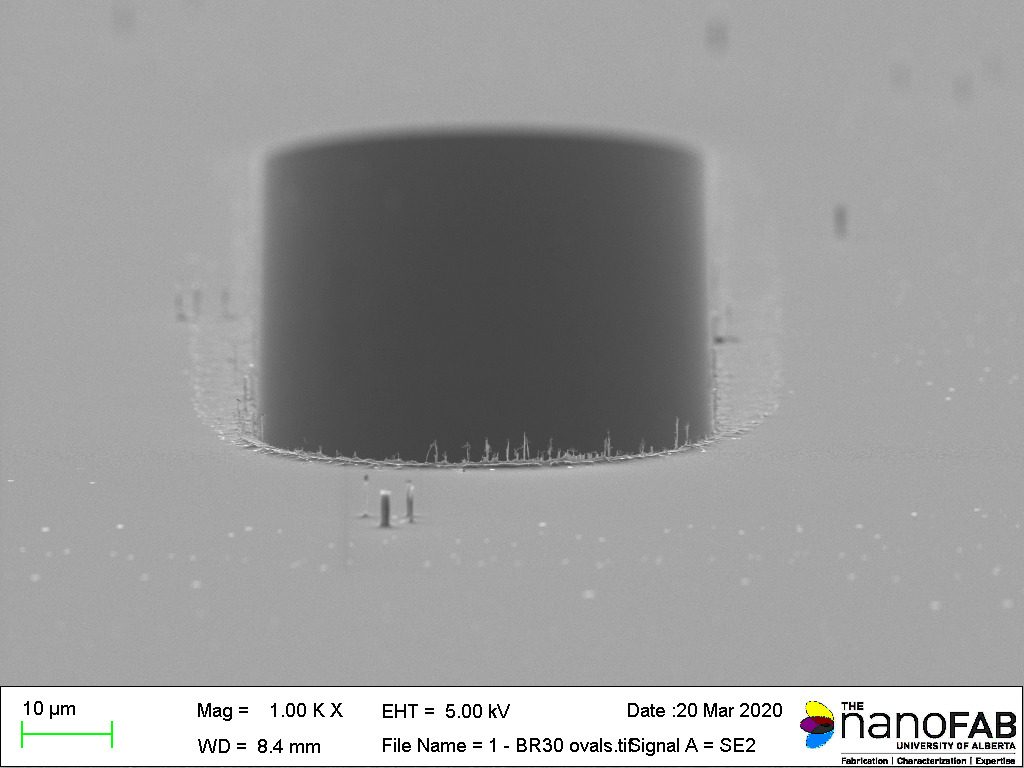
Structure: oval trenches
Branson (60 min) - 10 µm posts
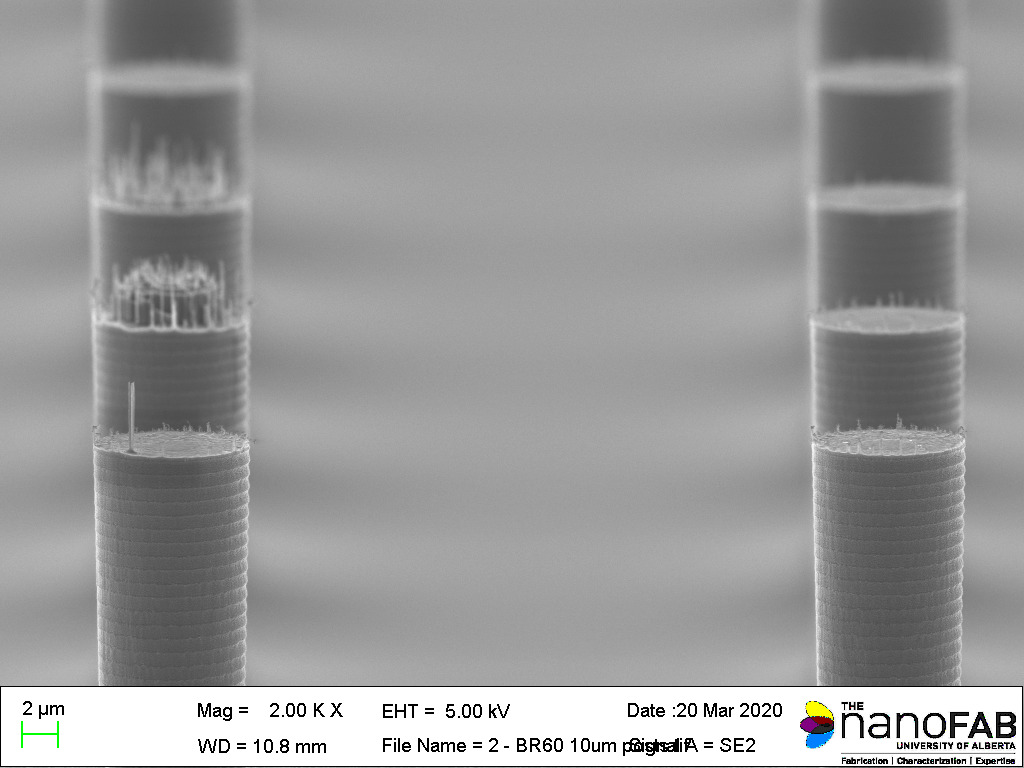
Structure: 10 µm posts
Branson (60 min) - 10 µm vias
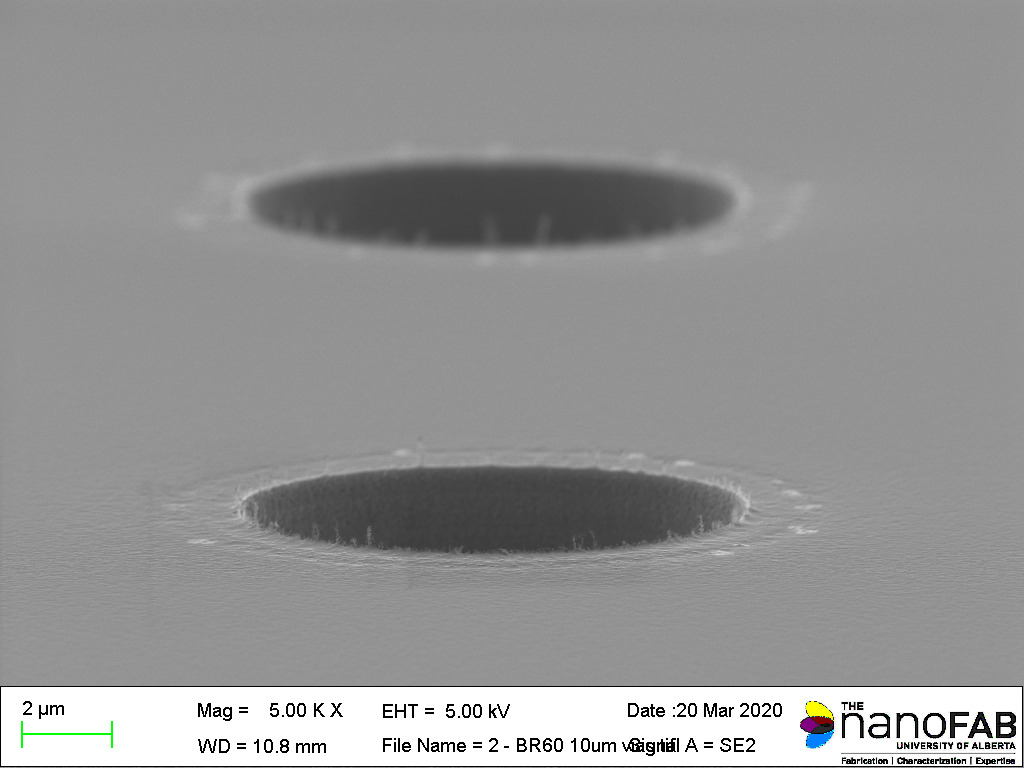
Structure: 10 µm vias
Branson (60 min) - ovals
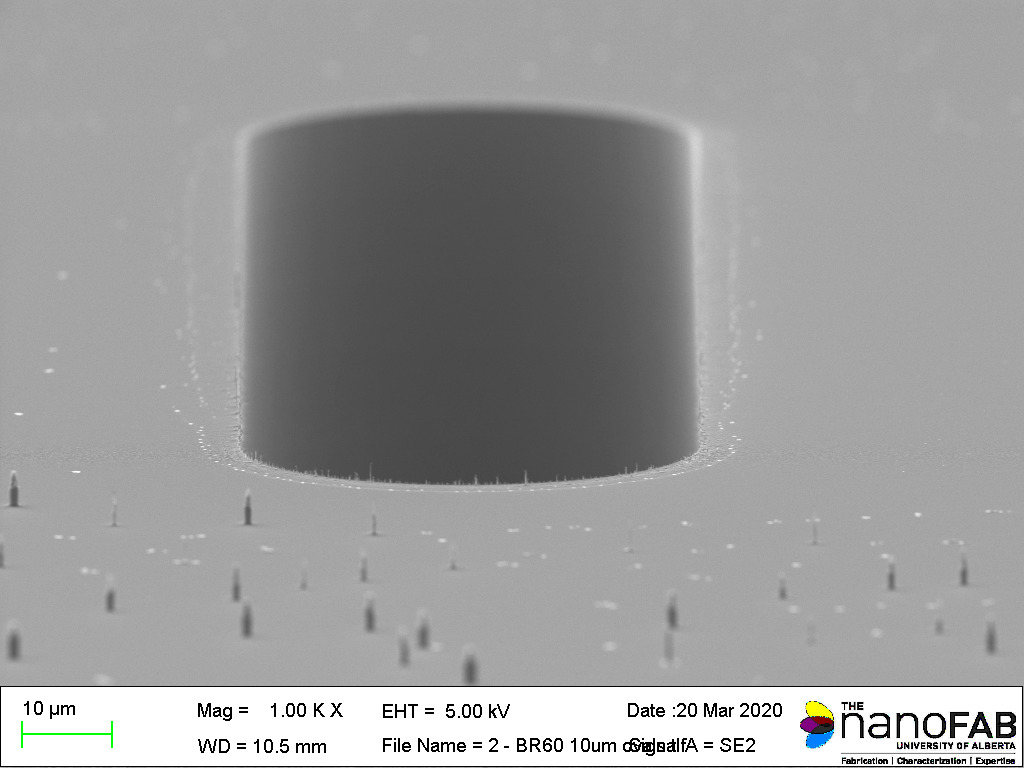
Structure: oval trenches
Branson + EKC - 10 µm posts
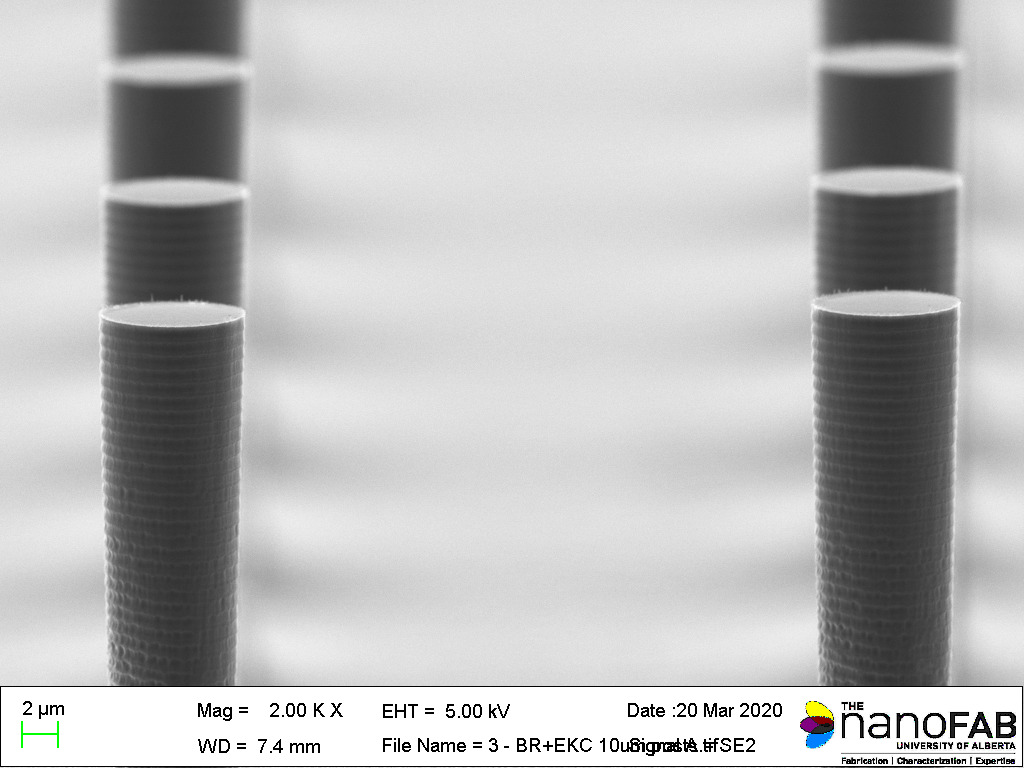
Structure: 10 µm posts
Branson + EKC - 10 µm vias
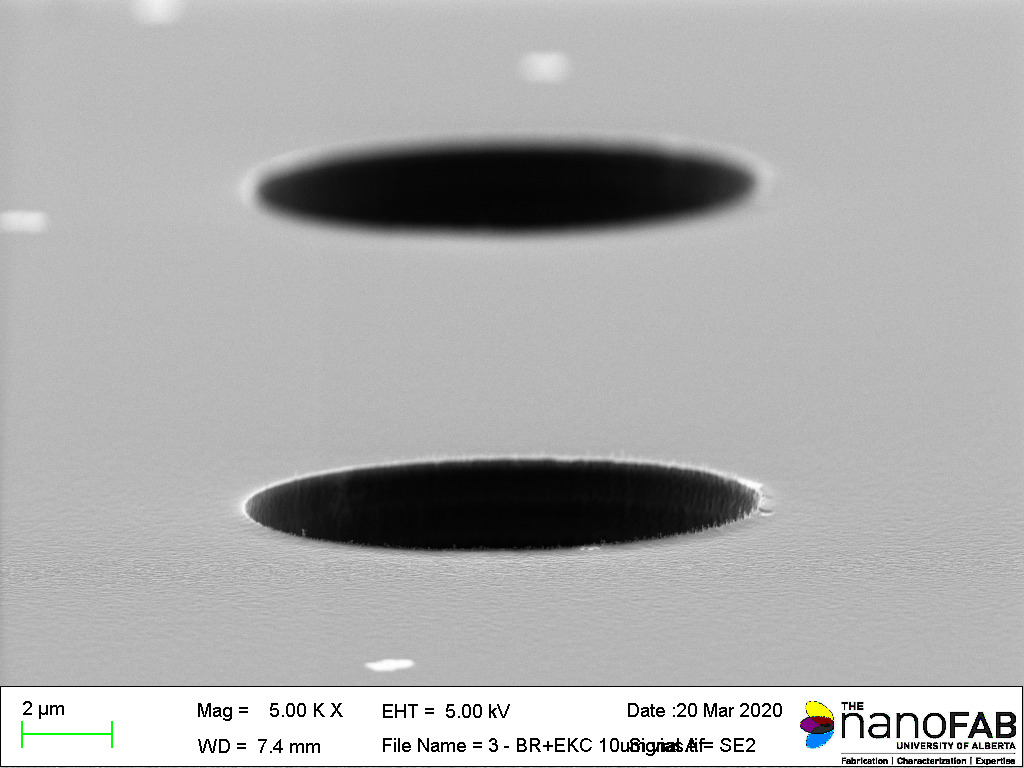
Structure: 10 µm vias
Branson + EKC - ovals
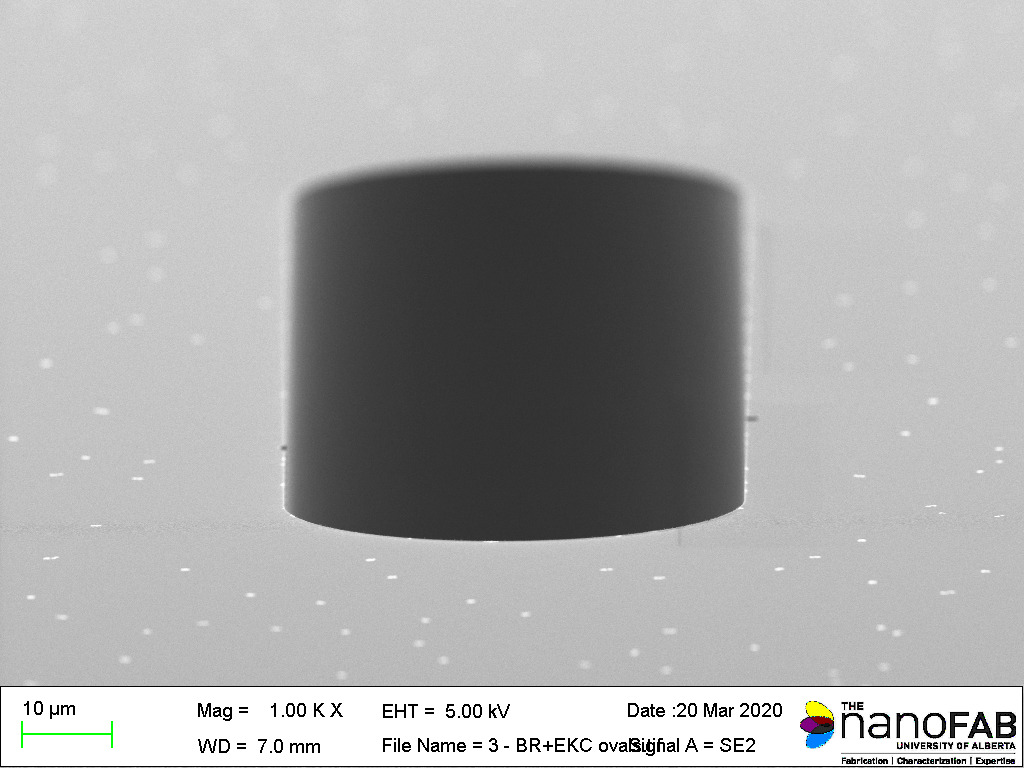
Structure: oval trenches
Branson + Minibrute - 10 µm posts
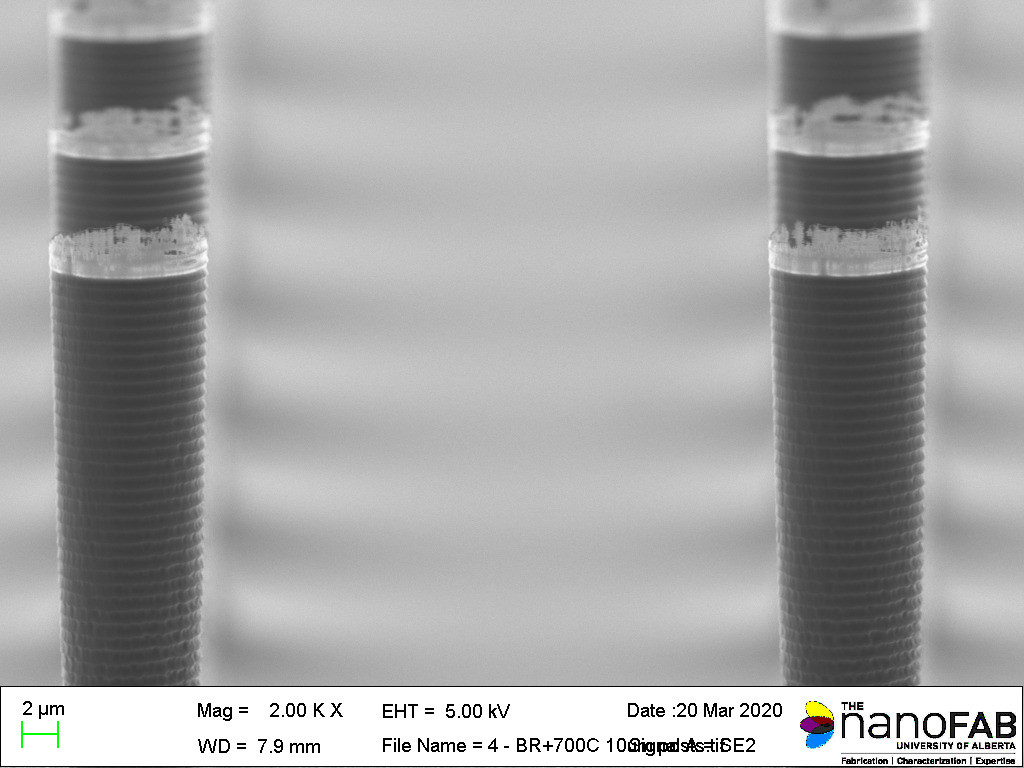
Structure: 10 µm posts
Branson + Minibrute - 10 µm vias
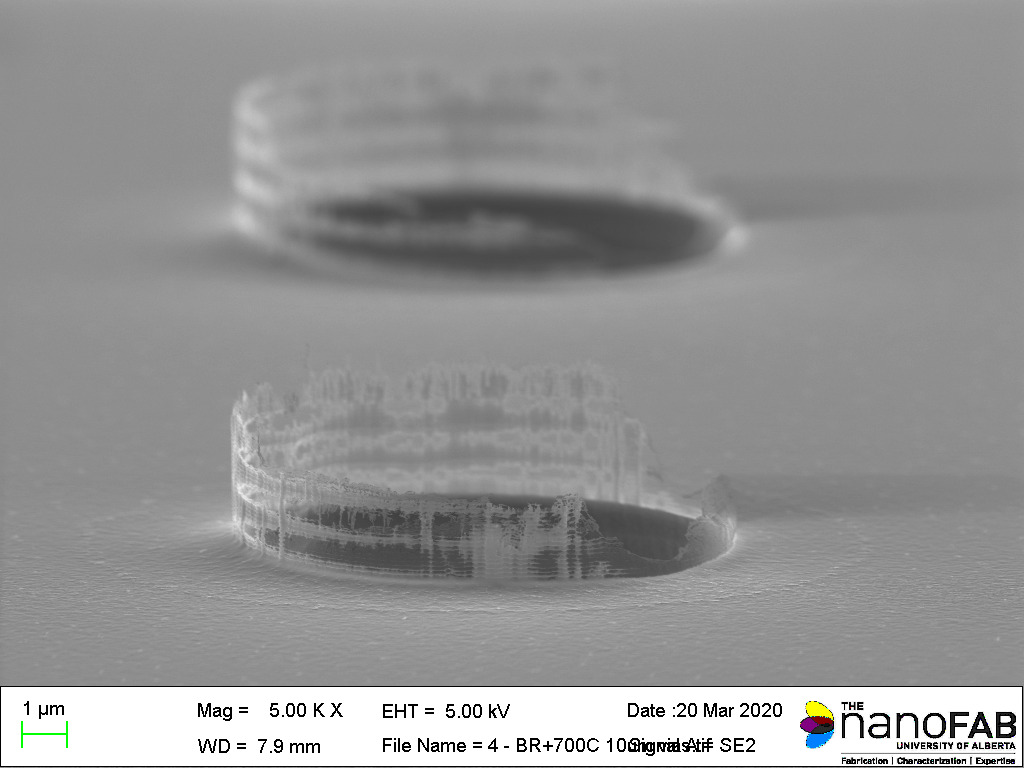
Structure: 10 µm vias
Branson + Minibrute - ovals
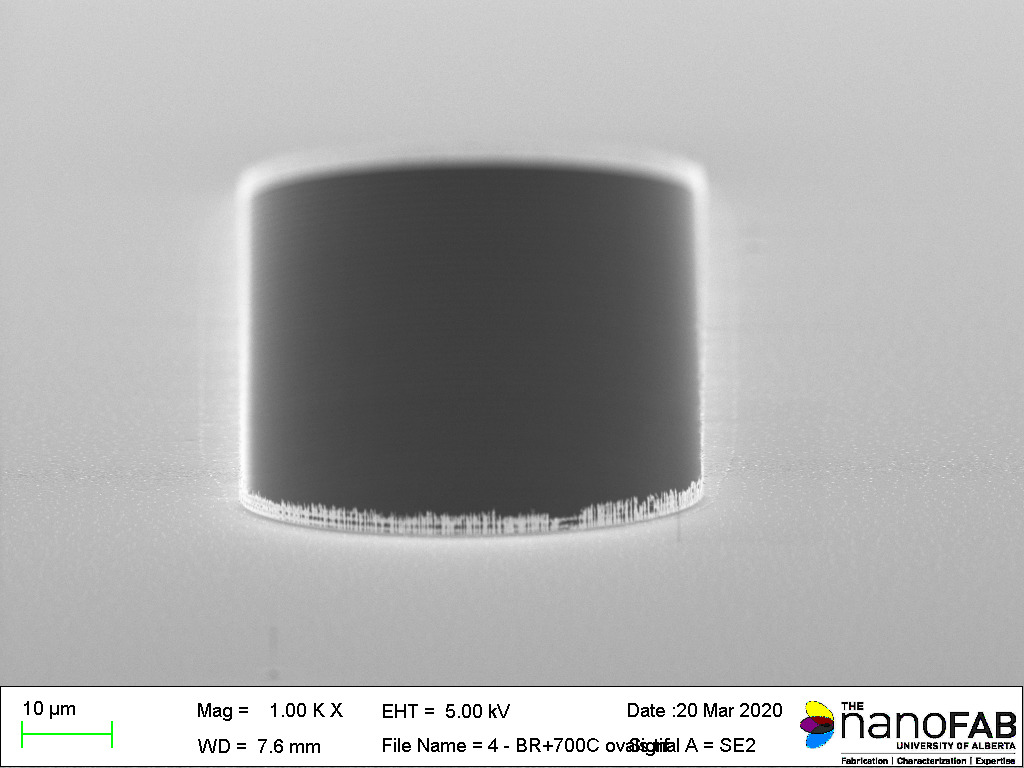
Structure: oval trenches
NGP80 (RIE) - 10 µm posts
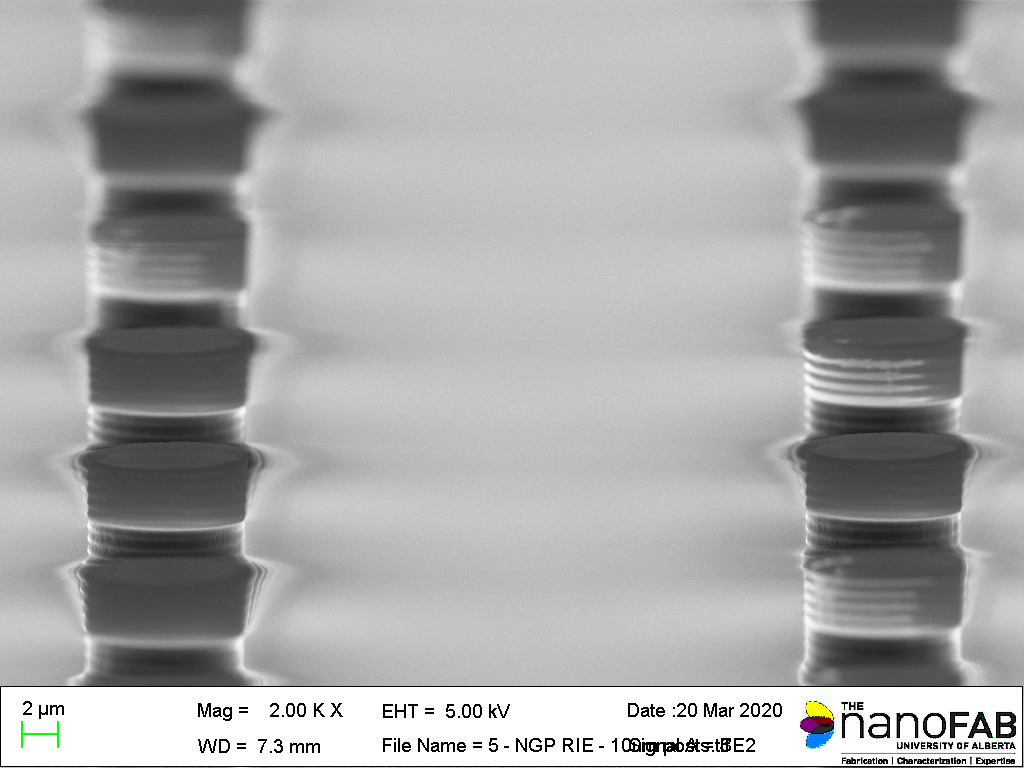
Structure: 10 µm posts
NGP80 (RIE) - 10 µm vias
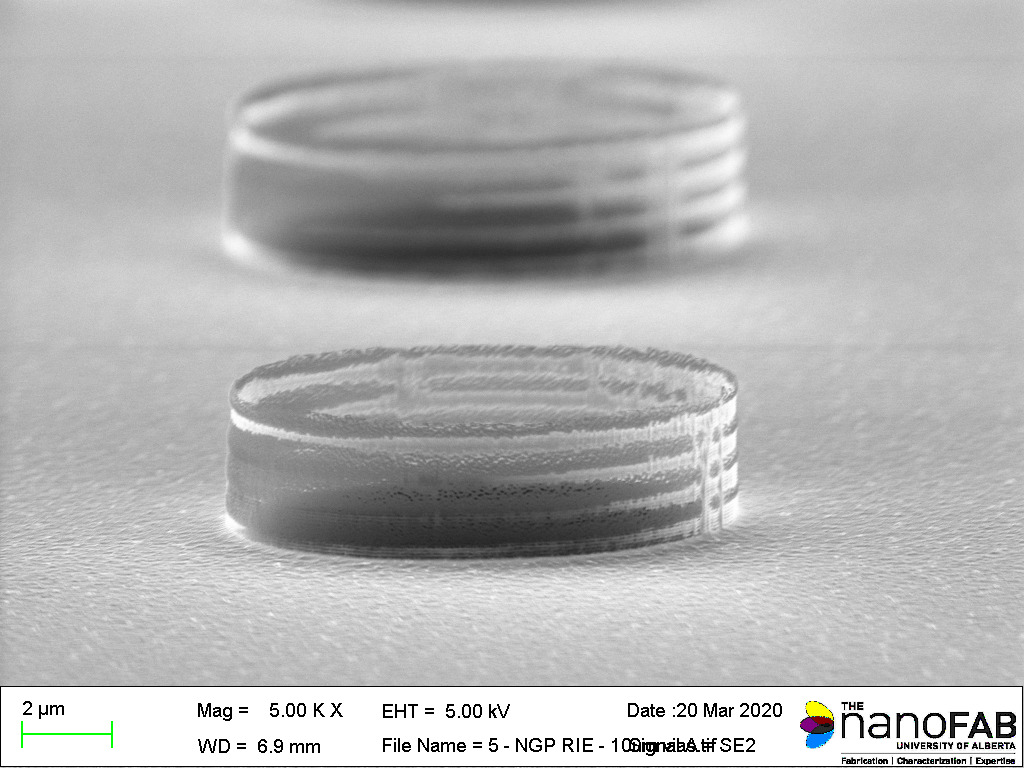
Structure: 10 µm vias
NGP80 (RIE) - ovals
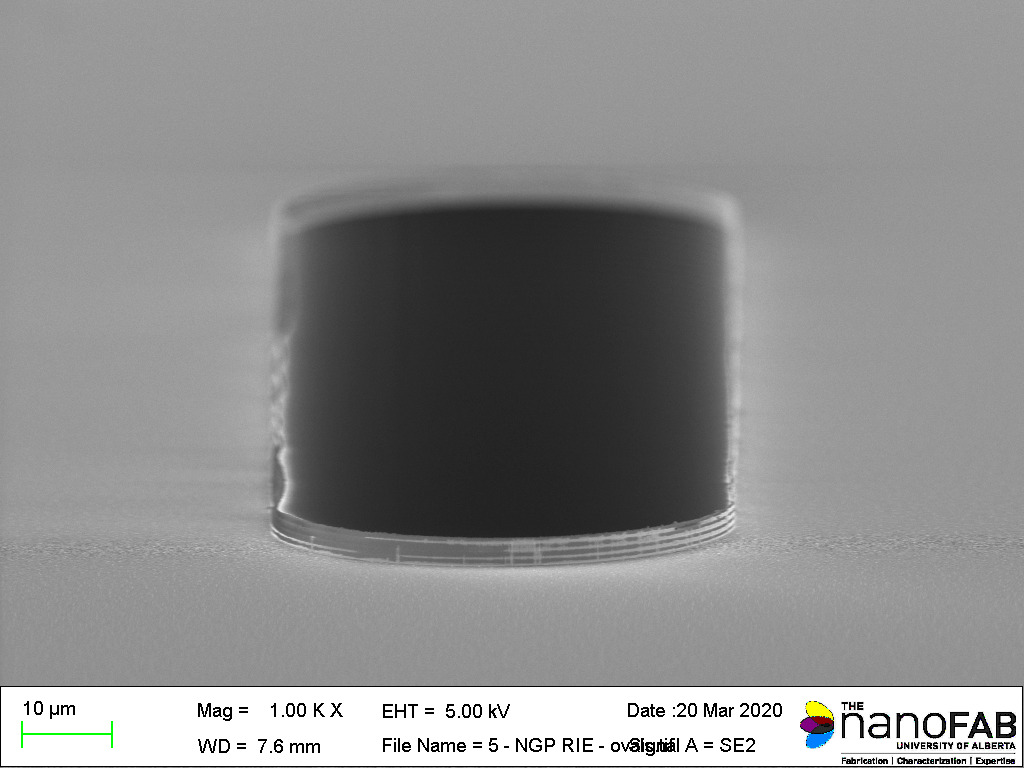
Structure: oval trenches
NGP80 (PE) - 10 µm posts
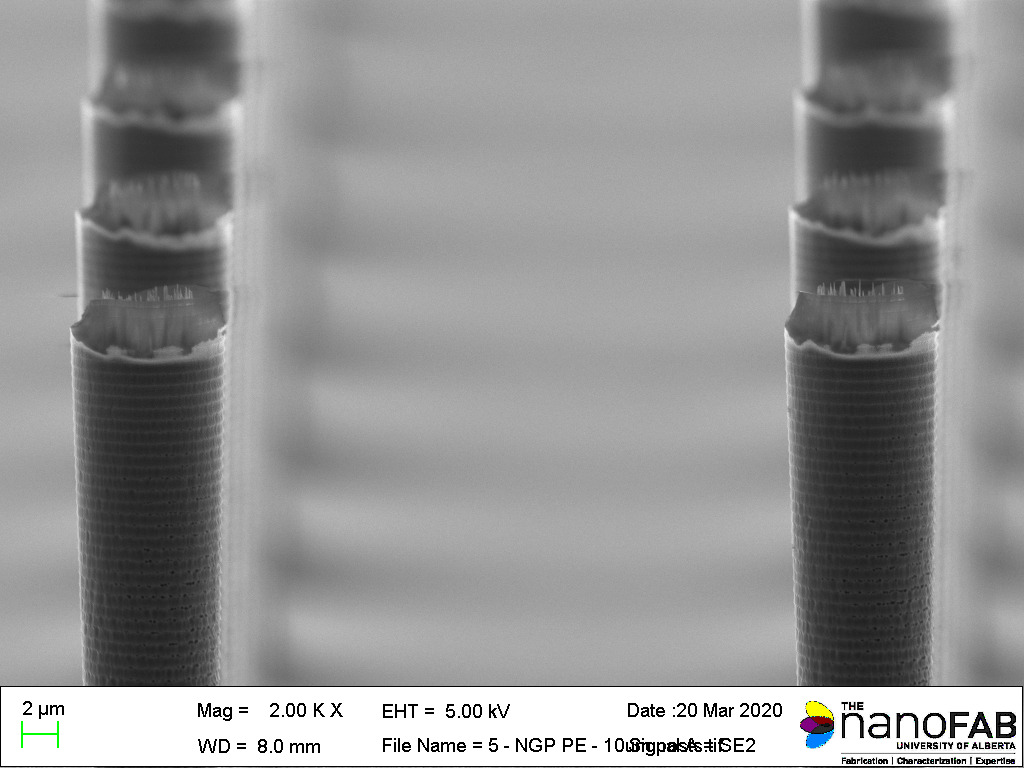
Structure: 10 µm posts
NGP80 (PE) - 10 µm vias
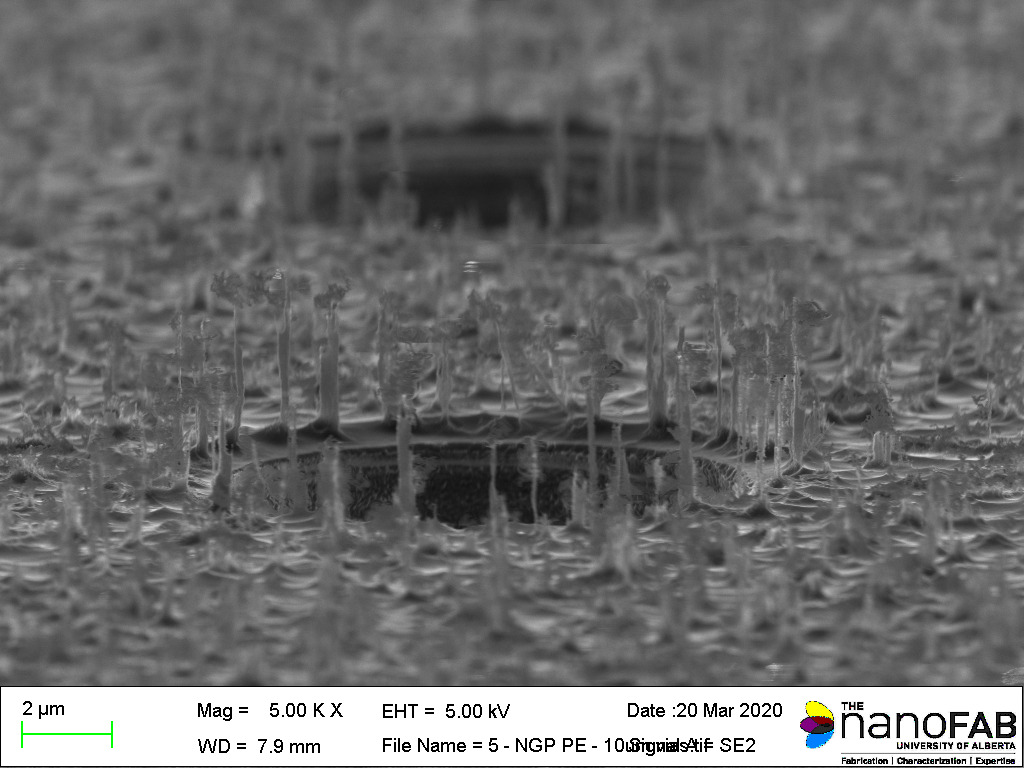
Structure: 10 µm vias
NGP80 (PE) - ovals
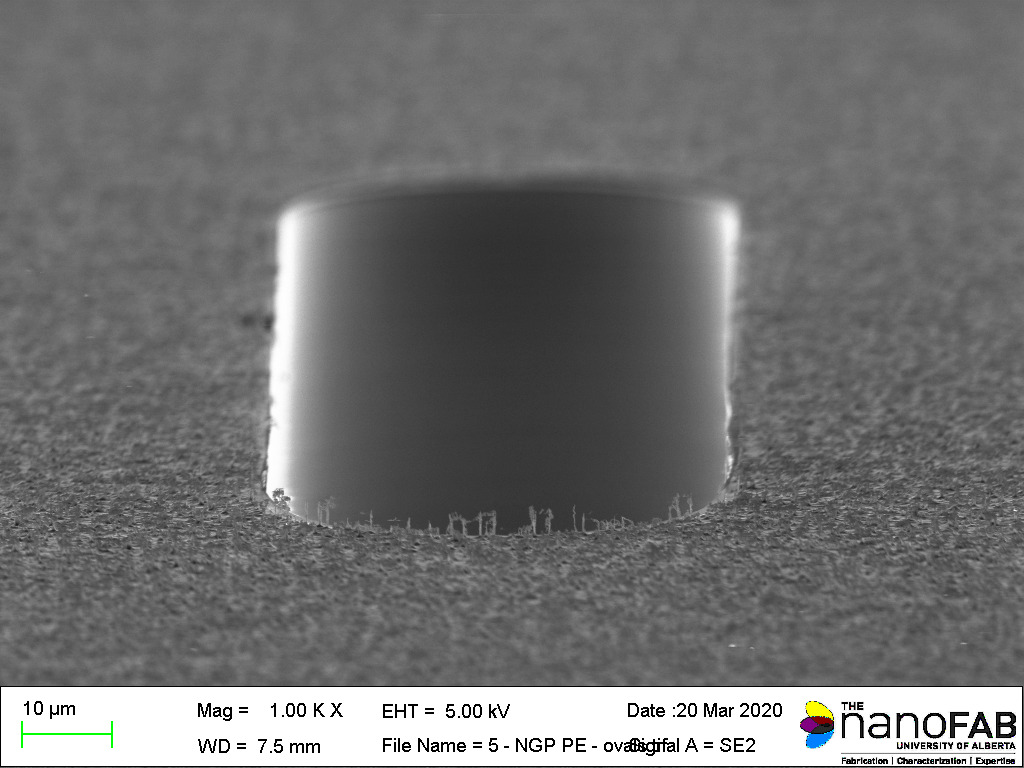
Structure: oval trenches
Trion RIE - 10 µm posts
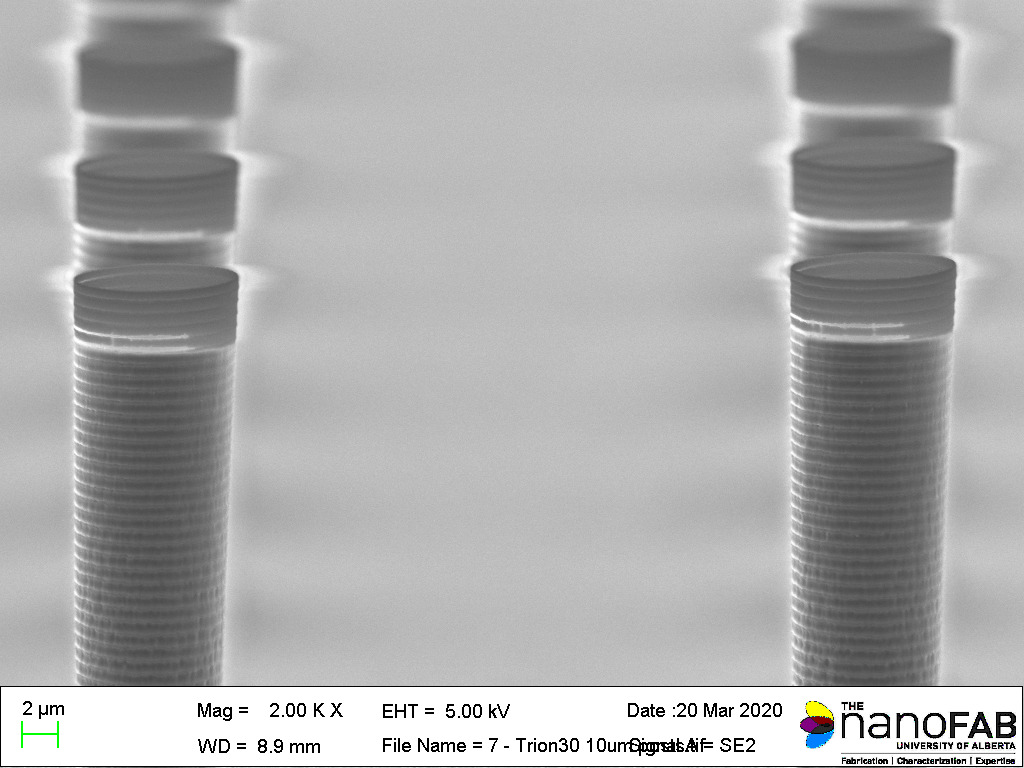
Structure: 10 µm posts
Trion RIE - 10 µm vias
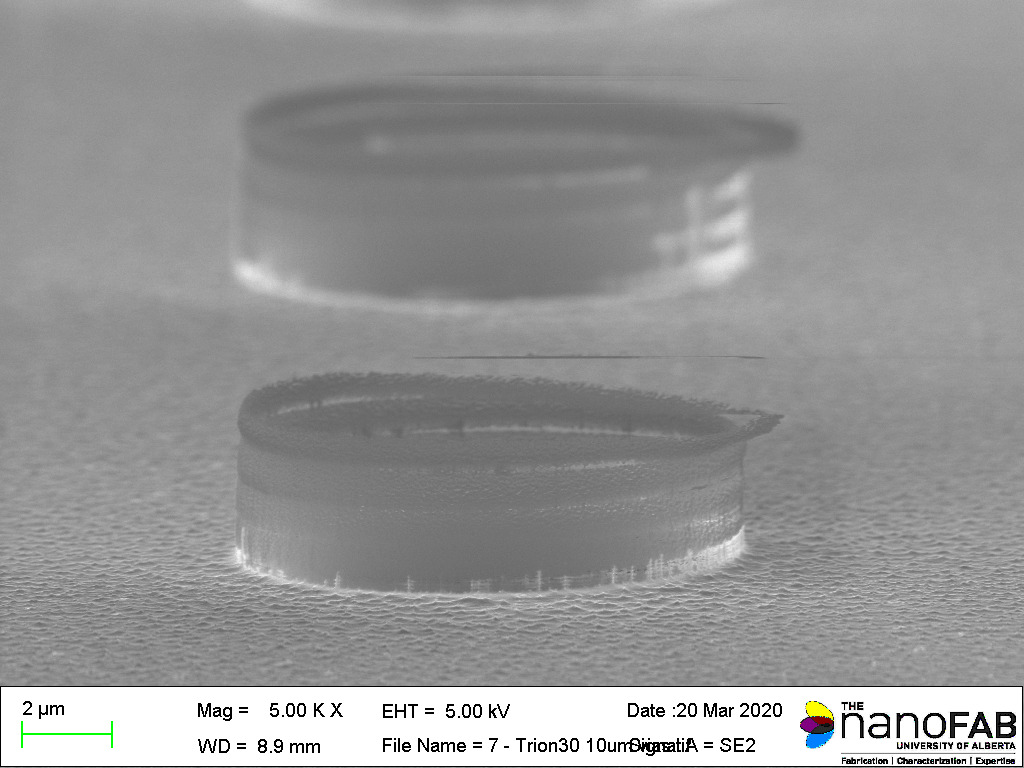
Structure: 10 µm vias
Trion RIE - ovals
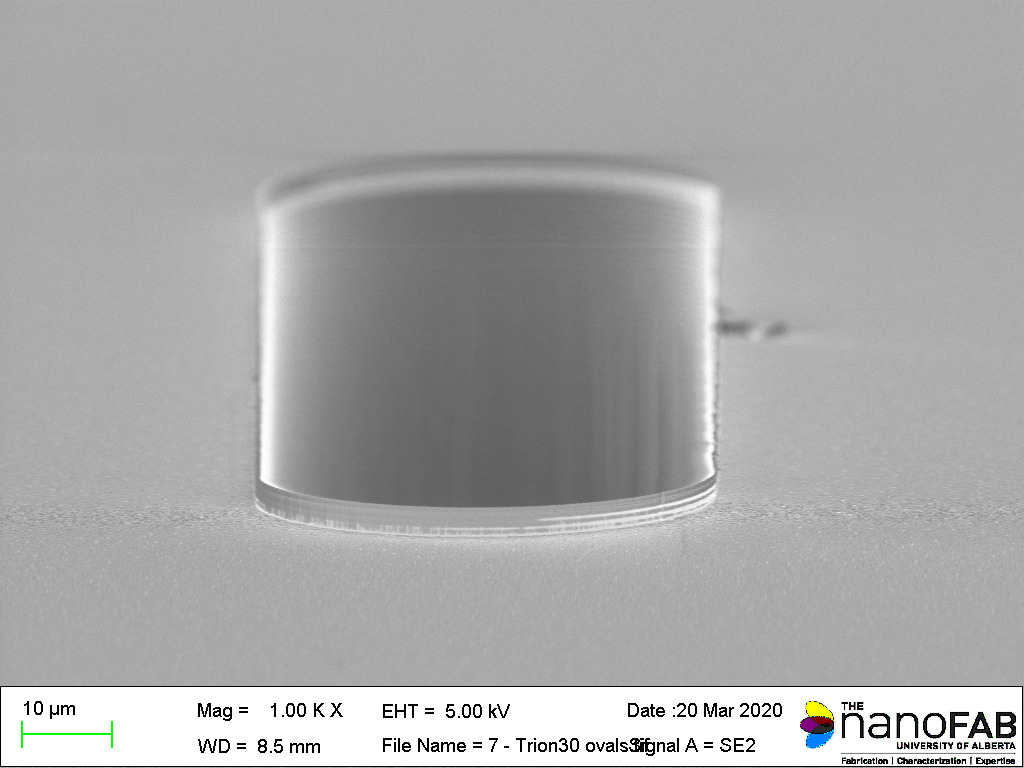
Structure: oval trenches
Piranha - 10 µm posts
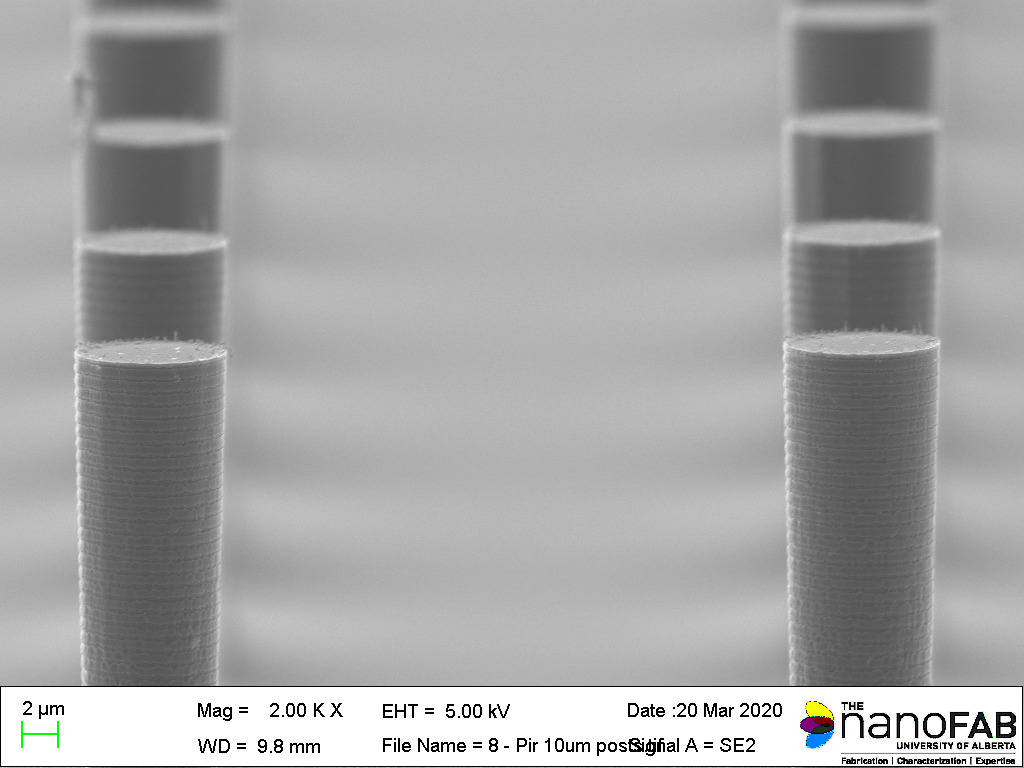
Structure: 10 µm posts
Piranha - 10 µm vias
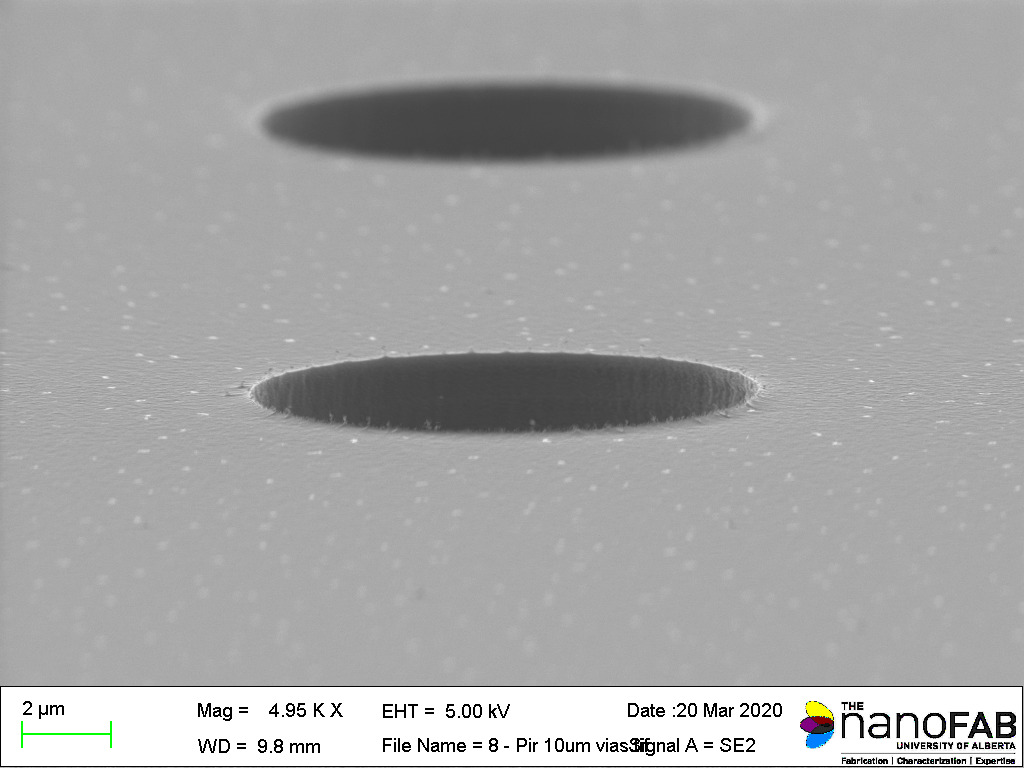
Structure: 10 µm vias
Piranha - ovals
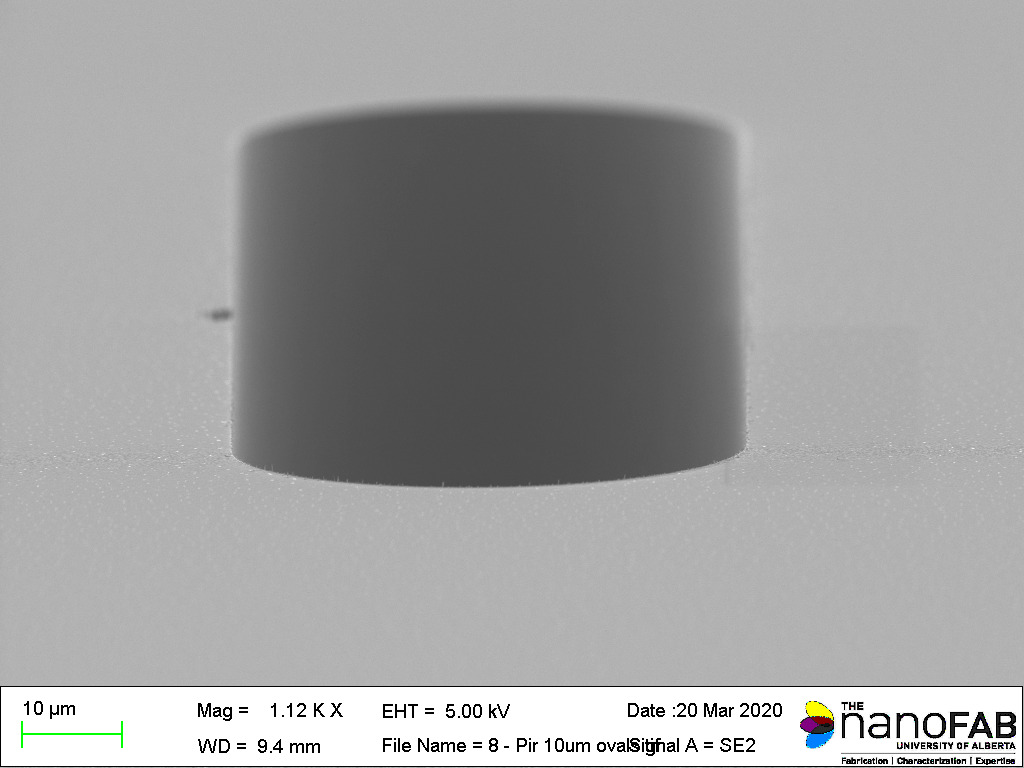
Structure: oval trenches
Based on these SEM images, the sidewall polymer removal techniques are ranked as follows, from best to worst:
- Branson + EKC265
- Piranha (very similar to Branson + EKC)
- Branson 60 min
- Branson 30 min
- Branson 30 min + Minibrute anneal
- NGP80 RIE
- Trion RIE (similar to NGP80 RIE)
- NGP80 PE
We therefore recommend either a 30-minute piranha, or a 30-minute ash in the Branson Barrel Etcher followed by a 30-minute soak in EKC265, to remove Bosch sidewall polymer most completely. A combination of 30 min Branson followed by 30 min piranha, while not tested in this study, is also highly recommended to remove especially tenacious sidewall polymer.
For more information on this study, as well as general DRIE and plasma etching questions, please contact Scott Munro.