









Stealth Dicing: Now at the nanoFAB!
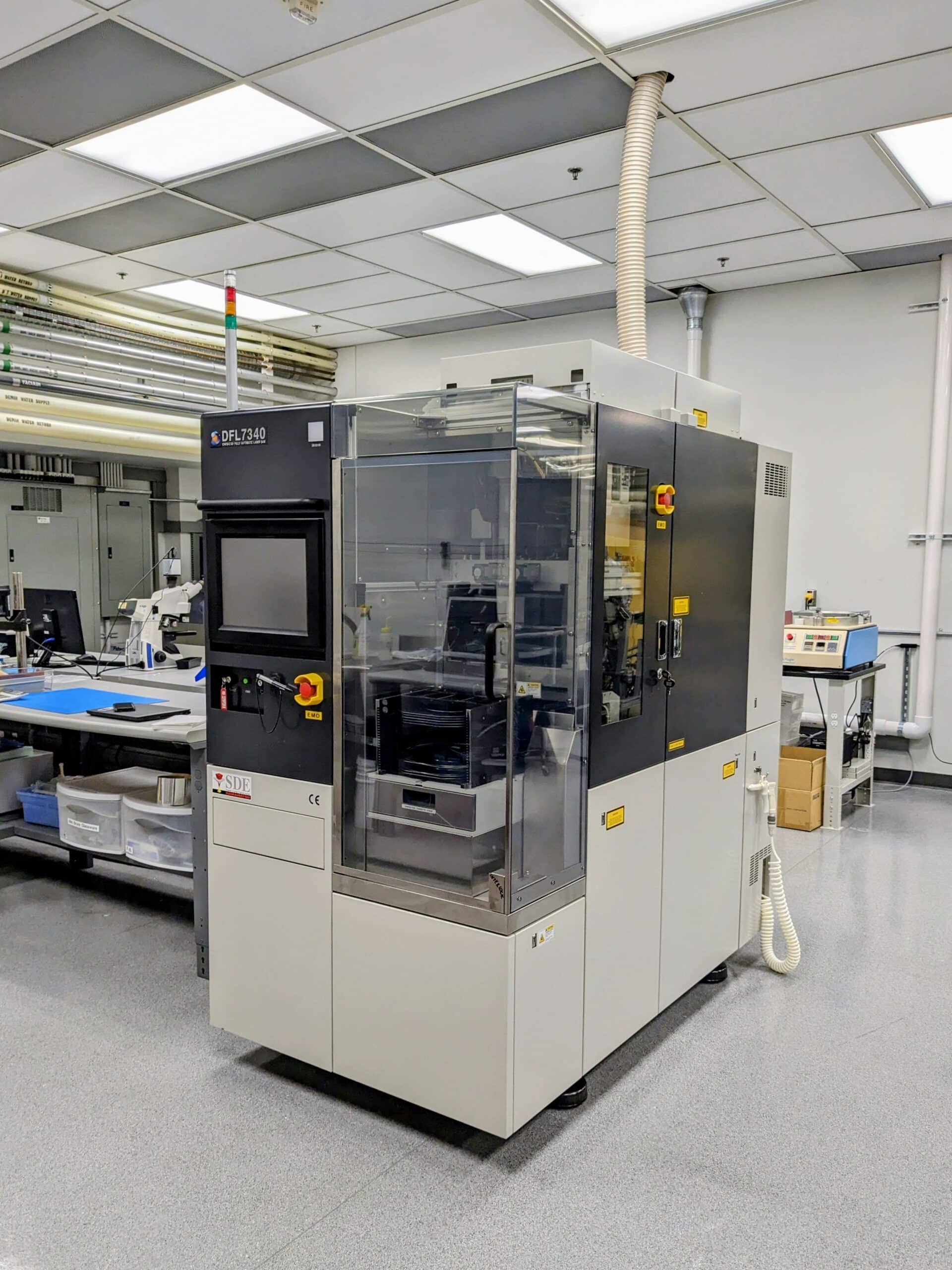
The nanoFAB is happy to announce the installation of a Disco DFL7340 Stealth Dicer into our 10k cleanroom space—only the second tool of its kind in Canada. Compared to mechanical dicing, stealth dicing has substantially less chipping and is able to "cut" dry. With no water present, MEMS wafers or other sensitive substrates can now be safely diced at the end of their processing, without the need for a photoresist layer to protect the surface. Our DFL7340 is equipped with a SDE03 stealth dicing engine, dedicated to dicing Si substrates only.
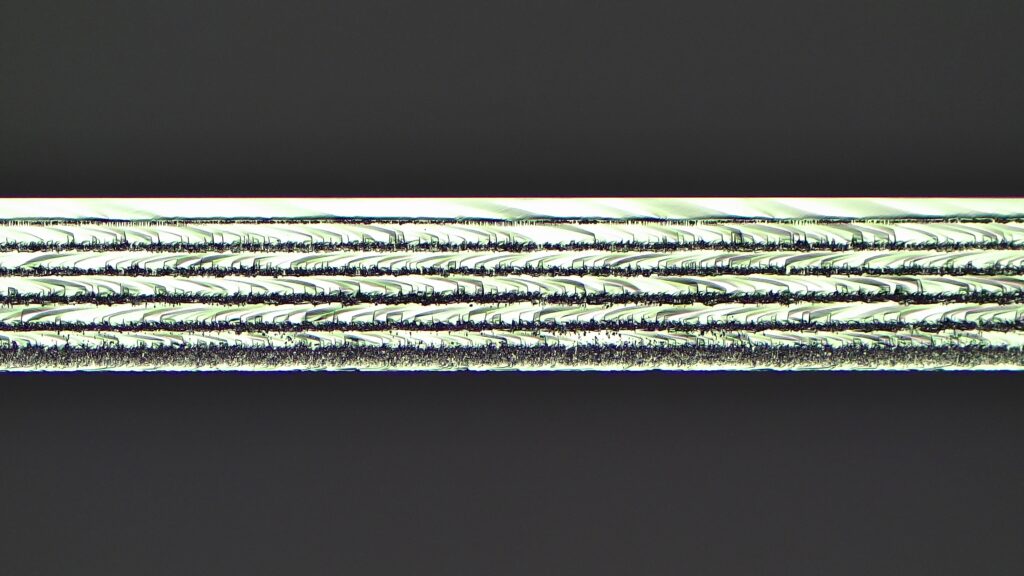
The stealth dicing process uses a ns-pulsed near infrared laser to create subsurface lines of voids and microcracks within the bulk Si; several lines at different depths and powers are typical in an optimised recipe. Crack propagation from these laser-modified lines singulate the wafer into individual dies—in this way, stealth dicing is more akin to "controlled cleaving" than sawing, with next to no material being removed from the dicing street (kerf loss). Compared to mechanical dicing, with its typical blade kerfs of 10s to 100s of µm, stealth dicing can therefore produce substantially less cutting waste, which in some cases can allow for more dies to be fit on a wafer. This process is also appropriate for samples that may be susceptible to contamination, as fewer particles are generated during stealth dicing vs. mechanical dicing.
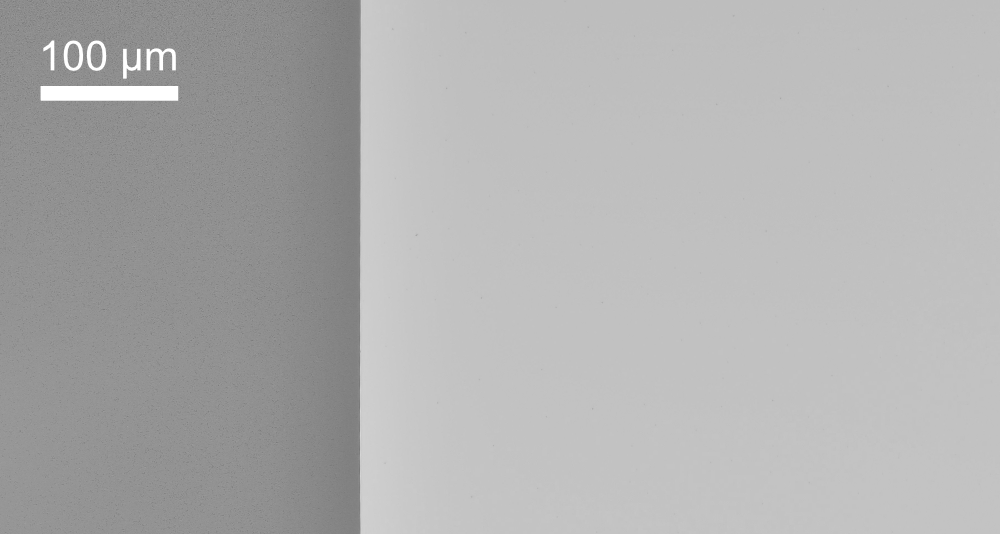
After dicing, a die expander is used to separate the dies after singulation to allow for "chipping-free" dies.

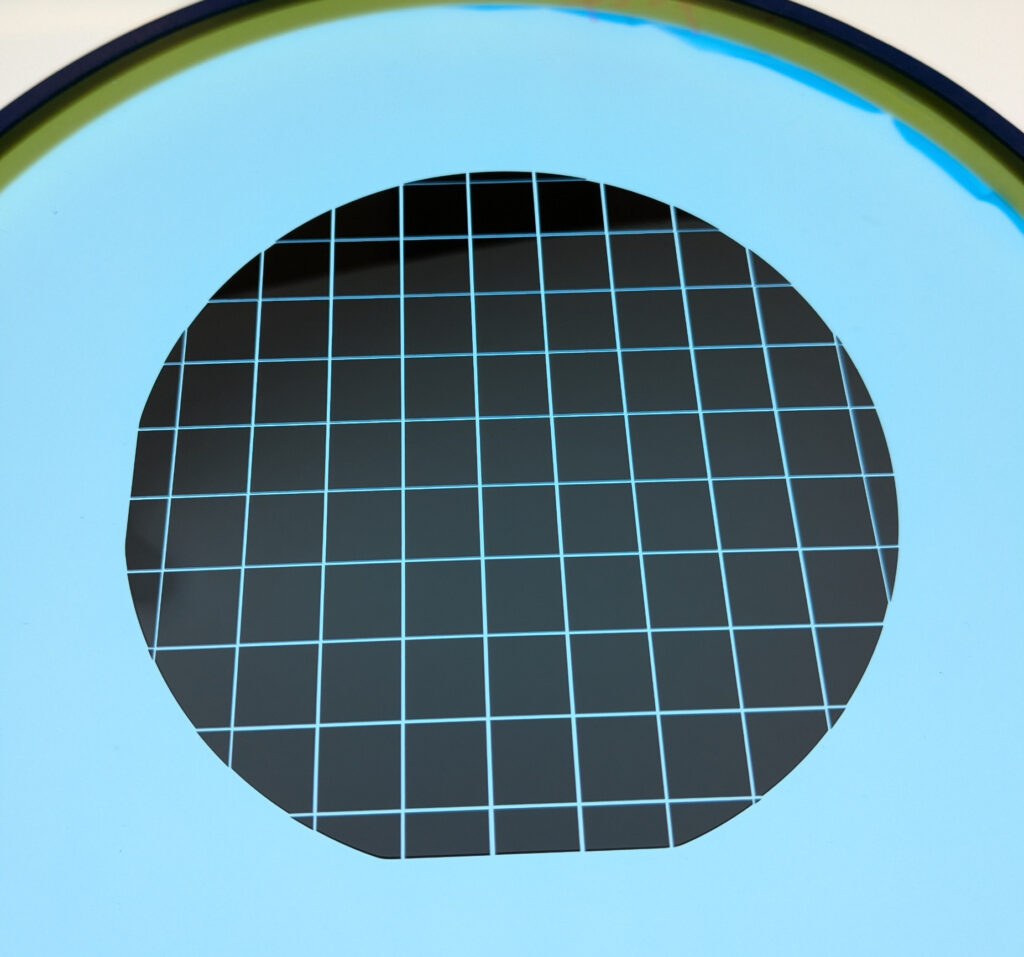
Wafer Expansion
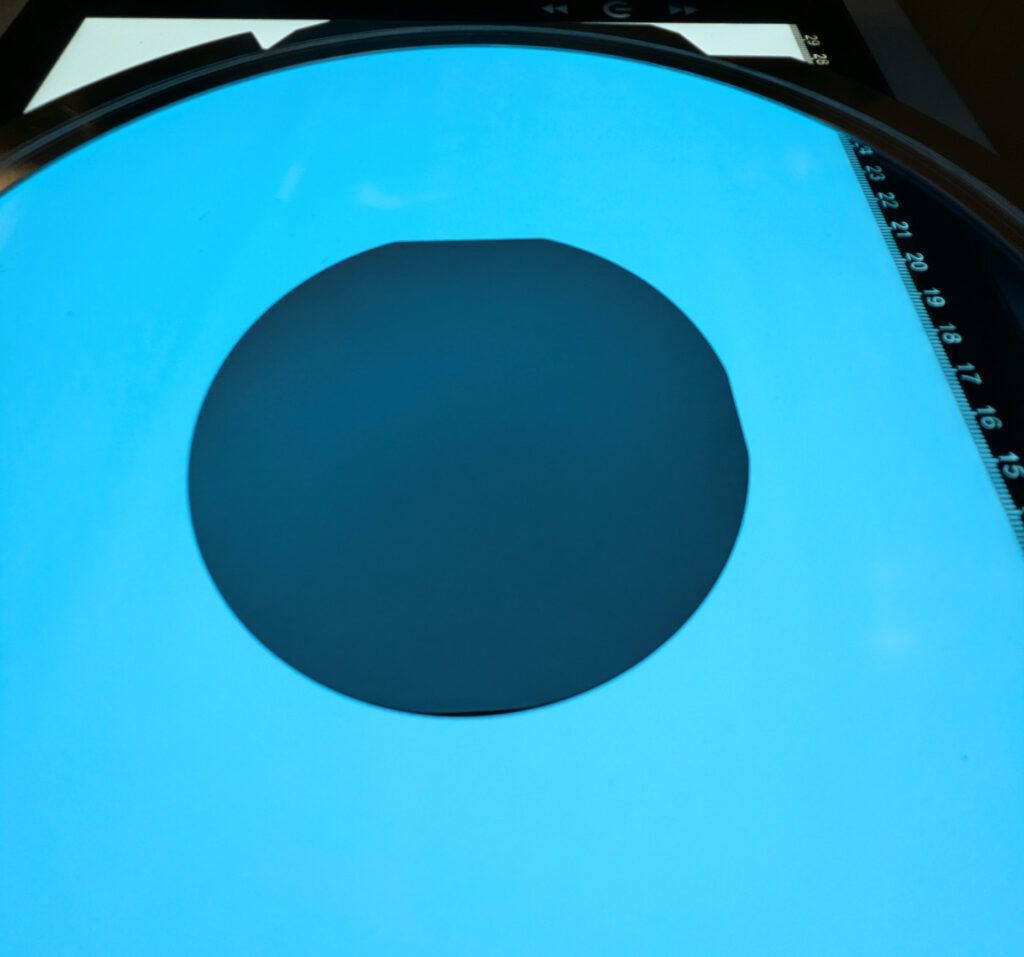
Typically, for a well-optimised recipe, the dies are already fully singulated after the stealth dicing process. With near-zero kerf loss, however, the dicing lines are not easily seen until after the tape is expanded.
Unique Geometries
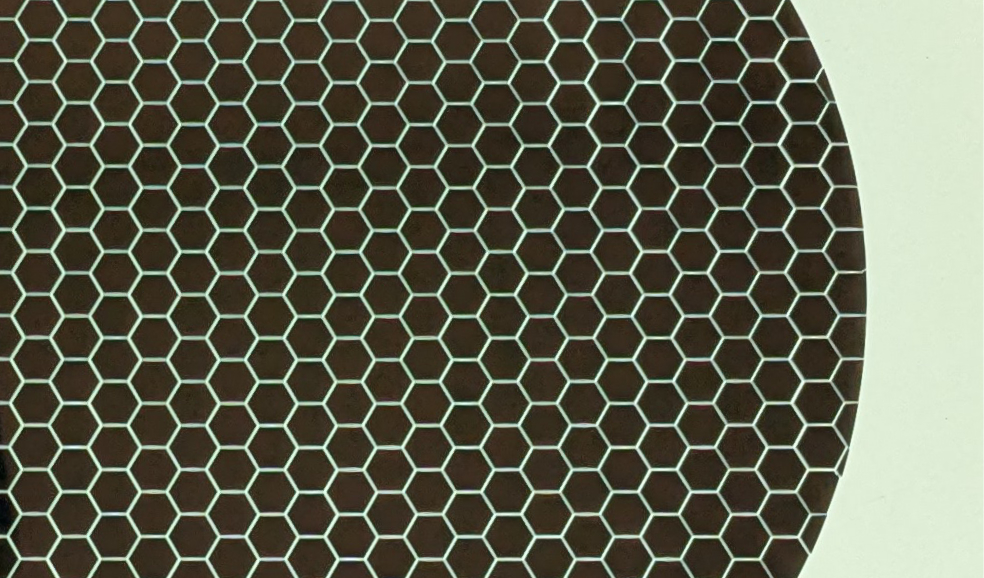
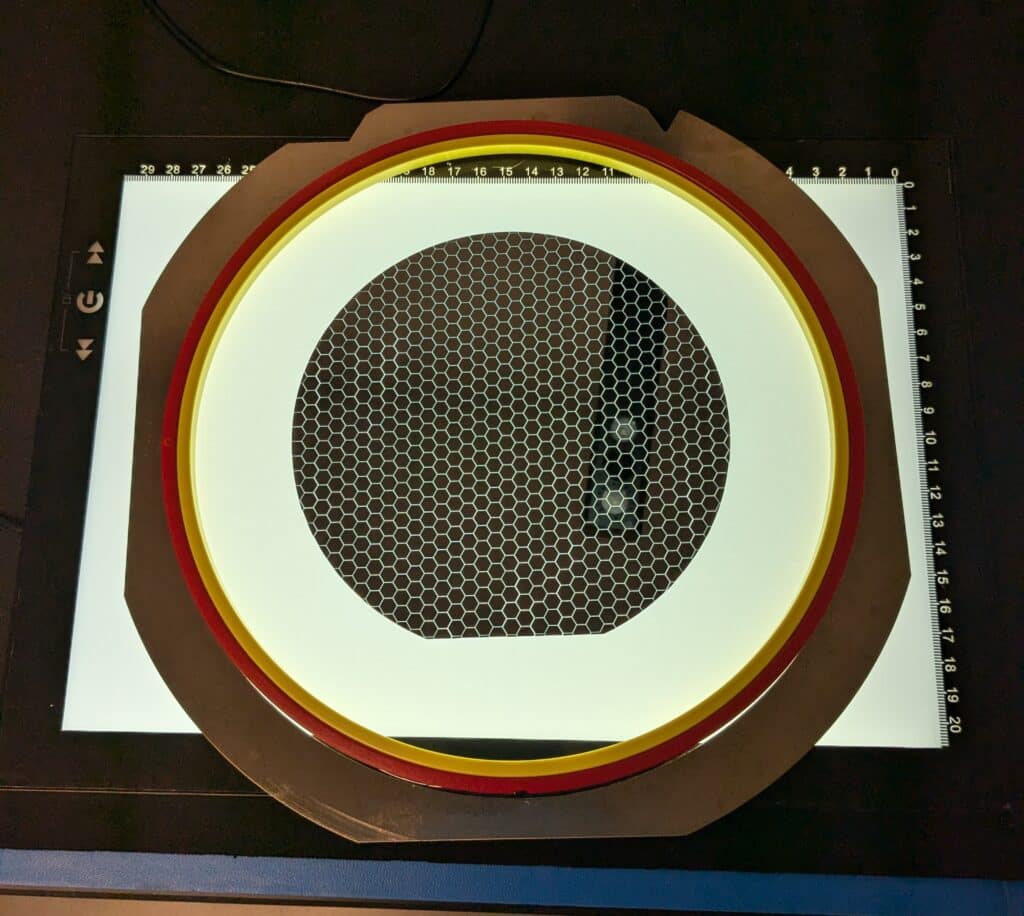
Because of the nature of stealth dicing, unique geometries such as hexagons are now possible—something impractical to do by mechanical dicing, where only continuous cuts across the substrate are generally possible. As the laser can be programmed to start and stop throughout the cut, producing arbitrary dashed lines, there are far more possibilities for design layout.
Want to know more?
Over the coming weeks, staff will be working to fully commission the tool to open for staff-only processing project submission; user training is not being offered on this tool at this time. Additional information on specimen compatibility can be found on the tool page. If you think that stealth dicing is a viable process to add to your fabrication workflow, please reach out to Aaron Hryciw (ahryciw@ualberta.ca) or Breanna Cherkawski (bcherkaw@ualberta.ca).